Why Go to Space?

I wrote this brief essay in response to a prompt inquiring about my thoughts on Human Access to Space and Space Flight. While the essay originally had a different purpose, I’ve posted it, here, because it discusses, at a high level, the current space industry in the context of some basic principles of international relations, geography, and cultural anthropology – disciplines that mean a lot to me. This is an intersection of perspectives that I don’t always come across but I think is relevant when considering how disruptive technologies, such as reusable rockets, may change our perspective of the world and humanity. Because of my diverse background in the arts, business, and international relations, I’m very academic – nerd alert (lol ^^) – and enjoy thinking deeply about events and technologies that change the course of humanity. The following is more of a personal essay with elements of international relations principles.
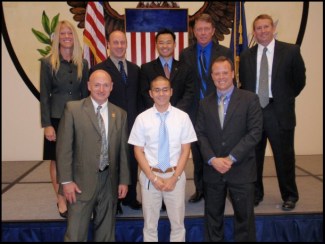 As an adopted Korean American Jew, I spent most of my academic career navigating ethnic and national differences to promote understanding. However, my perspective and sense of purpose began to change when I was an Economic Section Intern at the U.S. Embassy in Tokyo, Japan. It was there that I met the NASA-Japan Representative during his presentation of the Space Transportation System (STS)-124 team. The representative expressed how space symbolizes common aspirations of humanity, how outer space belongs to all of us and that we all share the dreams that it inspires. With a background in international relations and cultural anthropology, most of my studies up until that time had been focused on how to prevent civilizations and nations from killing each other and in the process, destroying each other’s cultures. In hearing the NASA-Japan representatives inspiring words, though, I gained a different insight on the common challenges we face on Earth, why human access to space is important and an awakening in my professional purpose to join the space industry to contribute and promote such ideals.
Most discussions on international relations begin from the lens of geography since the social creation, recognition, and disagreement of borders have a significant impact on culture, religion, social behaviors, and language. In viewing the Earth and its continents from space, however, these borders – the basis for understanding our differences – do not exist. (There are only a few exceptions, such as North Korea, India-Pakistan, etc.) In agreement with Dr. Mae Jemison, the first African American woman in space, “To survive as a species on this planet, we’re going to have to see ourselves as Earthlings.” Humans partly create their identities based on comparison, which can be helpful in understanding ourselves as individuals and to navigate life, but this focus alone has its limitations when overcoming conflicts. With a growing global population of 7.6 billion people, we need a new perspective.
In response to the first space tourist, Dennis Tito, on the International Space Station in 2001, US astronaut Dr. Jerry Linenger said, “I wish everyone could go up there…I think it would change human beings and the way we look at each other, and realize we are all in this together, but I can’t snap my fingers and get you up there.” In his book, Overview Effect, Frank White describes Linenger’s experience as the “overview effect” – a cognitive shift in awareness of astronauts when seeing first hand the reality of the Earth from space. Similarly, upon experiencing space while on the ISS, Tito related, “I think if a lot of people know what I know now, there would be a huge demand.” Linenger’s insight and the occurrence of Tito’s spaceflight challenge the old perception that only countries or huge aerospace companies, including NASA, can develop access to orbit. Set in the context of a nascent new space industry at the time, Tito’s spaceflight sparked the discussion of how the rationales to pursue human access to space and space flight could shift from a largely government emphasis on national security and prestige to also include a market-based and even utopian focus to solve global problems and improve the human condition.
Since the beginning of the Space Age, many have questioned the relevance and urgency of nations and commercial companies to pursue human space flight space programs due to its inherent high costs and risks. Given the many problems in the world: poverty, war, economic inequality, etc., wouldn’t it be more appropriate to focus resources on these issues? Rationales such as national security and prestige are often cited to answer the question. Building upon these approaches, though, I believe that the greatest challenges we face in the 21st century – from energy and climate to global health and population – are global in scope and addressing them to improve life for future generations will require collaboration among many nations (not the leadership of a single country), companies and individuals. When describing his experience of the overview effect, I believe this is what Linenger meant by, “[A]nd realize we are all in this together.” To add, space technologies will play an important role in addressing these global issues. OneWeb, for instance, aims to launch over 2,000 satellites to provide global Internet access with a particular focus on reaching rural areas where two million schools are without broadband. And other NewSpace and legacy space companies have similar missions for improving our condition on Earth.
To continue, however, the ongoing emergence and maintenance of such noble initiatives there needs to be a reduction in the cost of launch – the current bottleneck in the space industry – which slows our progress towards even larger scale projects such as lunar colonization and asteroid mining. In his book, The Heavens and The Earth: A Political History of the Space Age, Walter McDougall emphasizes that to restart the Space Age, there needs to be a new principle that makes spaceflight genuinely cheap, safe, and routine. This is the reason why NewSpace launch vehicle companies (including Blue Origin, Rocket Lab, Virgin Galactic and others) and their collaboration with the National Aeronautics & Space Administration (NASA) have such an important role in the industry with their reusable rocket solutions – all aimed at democratizing access to space for the public and other private companies. Launch solutions, such as New Glenn and SpaceShipTwo, make possible Linenger and Tito’s thoughts on how space could become accessible for everyone.
In closing, no matter where humans travel in space, Earth is still home. Echoing the words of the great geographer Felipe Fernandez-Armesto, even when hypothesizing what else could be out there, we know of nowhere else in the universe where so much has happened and is happening today. By galactic standards, our global history is a small story – but it’s a good one as we’re inseparable from the environment we’ve emerged from. Democratizing access to space represents the audacity of humans to pursue greater solutions beyond our world of solids and gases, while not forgetting about why it is home.